
Dog Whistles and Dinner Parties: How the Civilized Mask the Savage
- Nov 30, 2024
- 5 min read
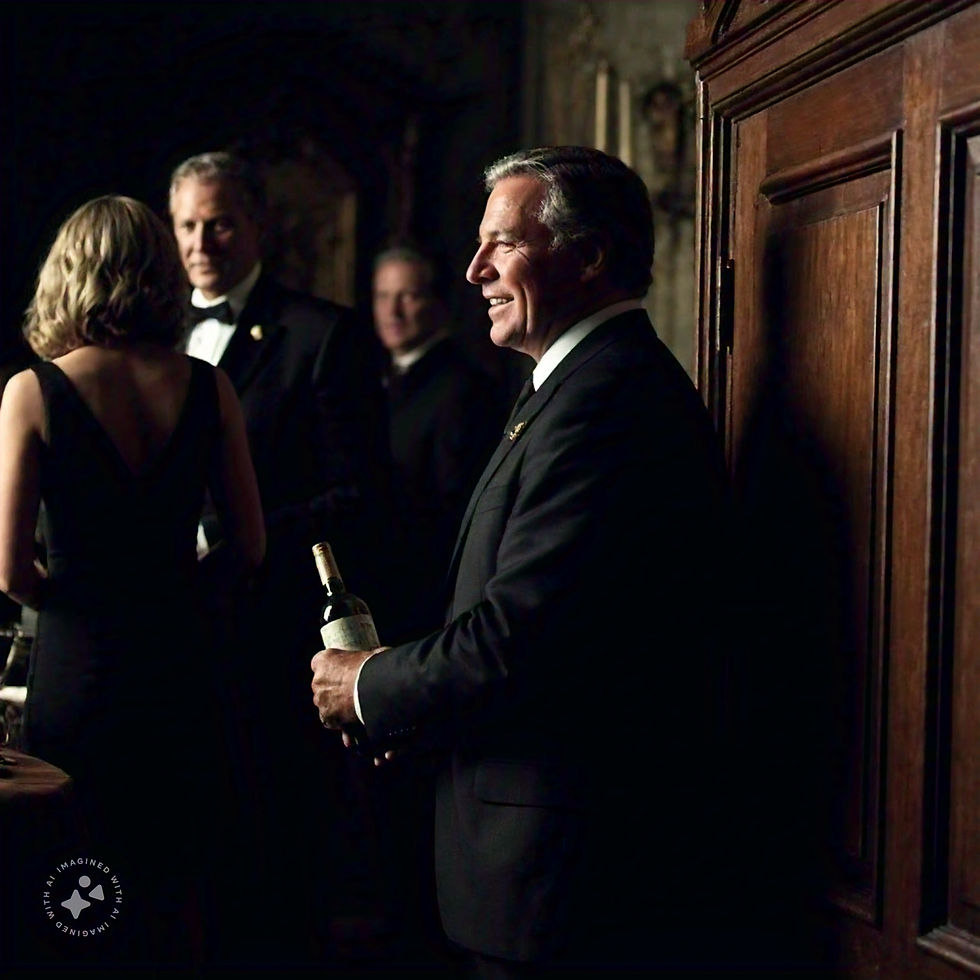
If you’ve ever found yourself at one of those "polite" gatherings, the ones where everyone is dressed in sharp suits, sipping wine, and smiling a little too much, you might have noticed something off-kilter. No, it’s not the overstuffed sofas or the slightly-too-loud classical music playing in the background. It’s that invisible, but unmistakable, thing that just feels… wrong. It's like a whisper you can't quite catch, but you know it’s there. The polite chit-chat about the weather, the arts, and the latest trending health fads — it's all part of the performance, isn’t it? The "refined" way they use language to mask what they really mean. They know they’re doing it. And you? You know you know, but you’re trying to be gracious because it’s just easier that way, right?
But here’s the thing: we’ve been trained — all of us — to believe that this is how civilized people behave. No matter how vile the intent underneath, it’s coated in layers of “politeness” that are supposed to make it palatable. And that’s where the real cruelty lies. Behind those sanitized smiles, behind the words that flow so effortlessly, is the real ugly truth: that same civility is a weapon used to oppress, isolate, and silence. It’s a weapon that allows the perpetrators to get away with their misdeeds while leaving the victims gasping for air in a world of unspoken rules.
But let’s unpack this. Why is it that white-collar crime gets a pass while marginalized people are held under a microscope for every minor infraction? Why is it that a friend’s cousin can skirt the law without consequences — getting into drugs, wrecking cars, even hurting people — while we are expected to maintain a constant state of perfect decorum, doing everything “right” but still subjected to constant judgment?
The Politeness Mask
Welcome to the world of dog whistles and dinner parties. These aren’t your average social gatherings, where everyone truly wants to engage and exchange ideas. No, these are spaces where the unspoken language of privilege thrives. And it’s all built on codes, symbols, and linguistic tricks — the stuff that seems harmless at first but is part of a long tradition of silencing marginalized voices.
Dog whistles are those little phrases, often couched in innocuous language, that the privileged use to signal to each other. Think of them as secret handshakes. A word here, a phrase there, all carefully crafted to make sure the real message is only picked up by those who know the code. For example, phrases like “I’m not racist, but…,” or “We just want the best for everyone,” are thin veils for deeper, more sinister beliefs. They allow the speaker to deny any accusations of discrimination while still signaling to others that they share a particular worldview. But you and I both know what lies beneath: it’s a worldview that keeps people like us out of the picture.
And at these dinners, where everyone sips their wine and smiles like they’ve never said anything harmful in their lives, the true intentions are masked by the veneer of politeness. It’s almost as if they believe that the more "civil" they are, the less their actions can be scrutinized. But behind those smooth words and gentle tones, the nastiness remains. A little racist joke here, a subtle comment there, all delivered with the same finesse as a glass of pinot noir.
The Hypocrisy of Civilized Culture
I’m not saying everyone at these events is malicious. No, it’s worse than that. What’s truly insidious is the hypocrisy — the belief that this polished, shallow layer of politeness makes them better than others. We see it every day: people who’ve never lifted a finger to better the world still consider themselves above those who are tirelessly working to fight for social justice. The kind of people who call themselves "spiritual" but wouldn’t dare give up their seat at the table, even if it meant making space for a more equitable world. It’s this duality, this fractured morality, that’s dangerous.
There’s a deep, gut-wrenching irony in all of this. These same individuals would never admit that they’re perpetuating harm — not because they don’t know, but because they’ve carefully crafted a system that ensures they remain untouchable. They’ve created a world where civility covers their tracks. They’ve turned decency into a shield, making it nearly impossible to challenge their actions without seeming uncivil or, worse, “angry” or “out of control.” This is the double-edged sword of politeness.
"But I’m Not Racist!"
Ah, yes. The dreaded phrase. It's as old as time itself. It’s the first line of defense in any encounter with white fragility. "But I’m not racist!" they protest, with that all-too-perfect smile. But let’s be real. Not being racist doesn’t absolve you of complicity in a racist system. It’s not enough to just not be racist anymore. You have to actively be anti-racist, to work to dismantle the very structures that allow this “politeness” to flourish unchecked.
Let’s talk about the fact that a well-placed “I’m not racist” in the middle of a conversation does absolutely nothing to change the systemic harm these individuals are causing. It’s a shield, a nice little buzzword to shut down conversations about equity, about real justice, and about genuine change. It’s part of the weaponry of privilege.
Breaking the Code
If you’re reading this and feeling your blood start to boil, good. You should be. But here’s the part where I tell you how we fight back. We fight back by pulling the curtain back. By calling out the double standards. By refusing to let these “polite” people off the hook for their actions. We fight back by refusing to sit at those tables where privilege thrives, and instead, we create our own spaces where civility isn’t used as a tool of oppression but as a foundation for real equality.
We don’t have to engage in their coded language or their performative politeness. We can speak plainly, with clarity, and with the raw honesty that they’re so desperately trying to avoid. And when they try to mask their ugliness behind a veil of civility, we simply peel it back and expose them for what they are: nothing more than cowards hiding behind their shiny smiles and empty words.
In Conclusion: The Dinner Table is Ours
Next time you find yourself at one of these dinner parties, remember: the polite words, the well-choreographed dances, the pleasantries — they’re all a cover. And you don’t have to play along. You don’t have to pretend that you don’t see what’s happening. Speak your truth. Make the uncomfortable comments. Expose the nonsense. Use your voice, your intellect, and your humor to shatter their illusions of civility.
You’re not the one who needs to apologize. They are. They just don’t know it yet.

Comments